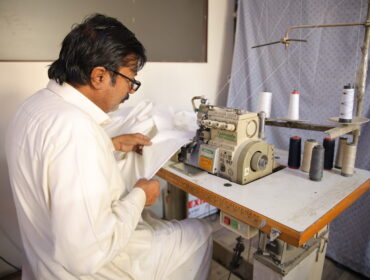

When you pull on your favorite pair of jeans, those trusty blue companions that seem to have been with you through thick and thin, it’s hard not to wonder: how exactly did they get made? Let’s take a quick journey through the life of one pair of jeans, from humble cotton fields to a closet superstar.
Spoiler alert: it’s a tale filled with twists, turns, and a few needle pricks along the way.
1. The Birth of Denim: Cotton’s First Act
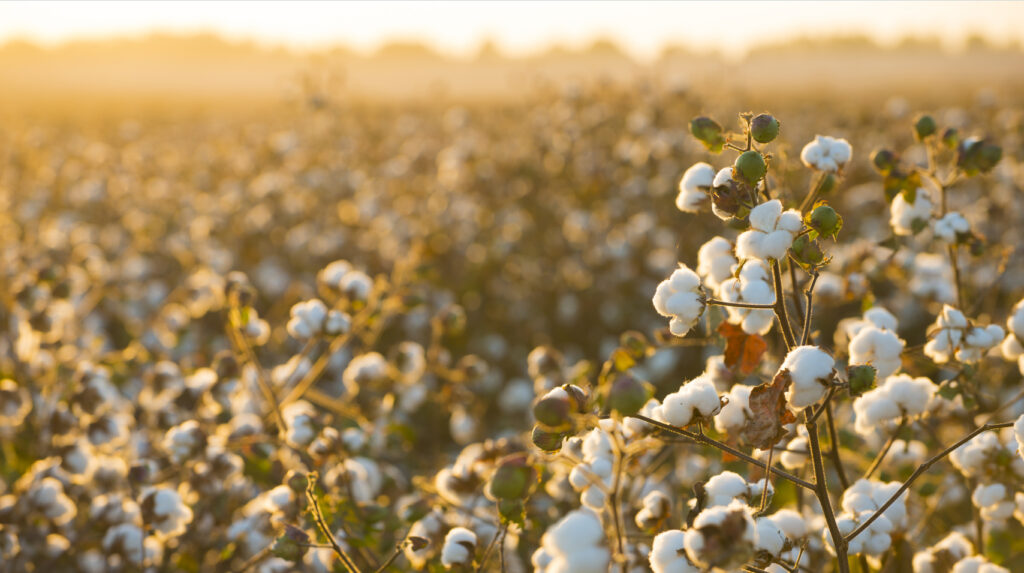
Our story begins in vast, sun-drenched cotton fields. Cotton plants bask in the glory of sunlight, working hard (and naturally, without overtime pay) to produce fluffy bolls. These bolls are harvested, often by machines in a process that gently removes the seeds and leaves behind pure cotton fiber.
Imagine the cotton fibers as the “raw ingredients” in a chef’s kitchen. They’re gathered up, cleaned, and then spun into yarn. Spinning is a bit like twirling spaghetti on your fork: the fibers are drawn out, twisted, and then wound into long, continuous strands that will eventually be woven into fabric.
2. Weaving the Dream: The Making of Denim Fabric
Once our yarn is ready, it’s time to hit the loom. Denim, the fabric that gives jeans their iconic look, is typically woven in a twill pattern. Picture a tight, rhythmic dance where two sets of threads (warp and weft) cross paths at angles, creating the signature diagonal ribbing. This weaving process not only defines the texture but also ensures that denim is super durable.
The fabric is often dyed with indigo, a natural dye extracted from plants that offers the deep, rich blue hue we all recognize. Indigo dyeing is an art form in itself, involving multiple dips and air-drying cycles. (Fun fact: Despite all that dipping, your jeans will never be mistaken for a deep-sea diver, though they do plunge into some serious color depths!) This dyeing process is a balancing act, ensuring the color is deep but still able to reveal a little character as the fabric fades over time.

3. Design: The Blueprint of Cool
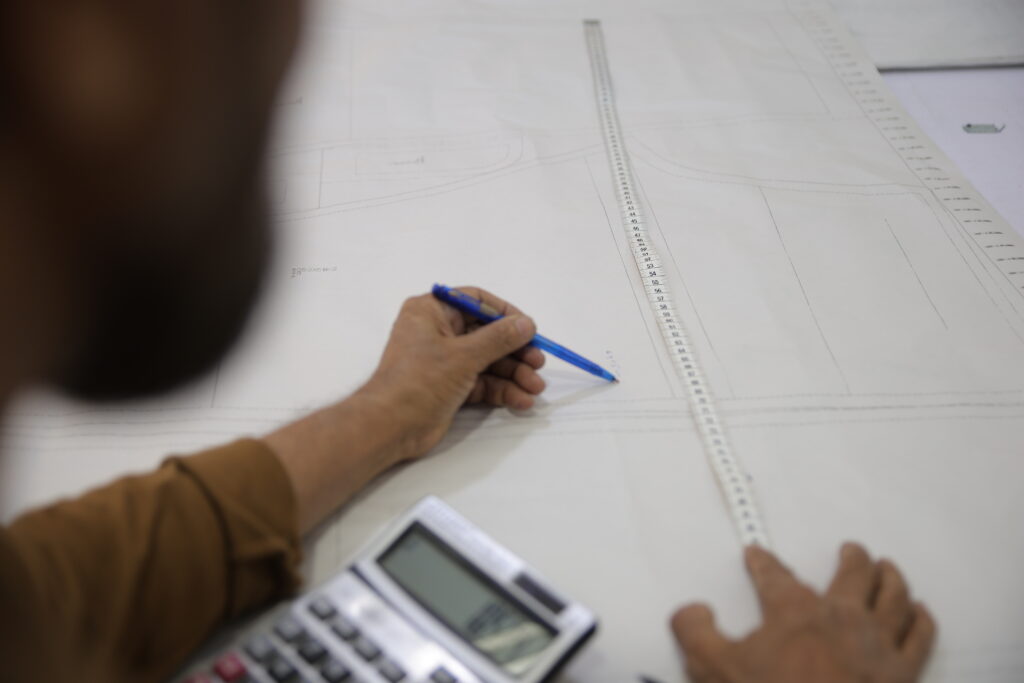
Before any fabric is cut, fashion designers and pattern makers step in. This is the phase where a pair of jeans transforms from a simple piece of denim into a potential style icon. Designers consider shrinkages, trends, fit, and functionality, sketching out detailed patterns. They decide on details like pocket placement, stitching style, rivet positions, and the shape of the legs.
Imagine a fashion designer’s studio as a cross between a mad scientist’s lab and an art gallery, where every crease and cut is a calculated experiment, and the outcome can be as unpredictable as the plot of your favorite sitcom.
4. Cutting the Fabric: The Art of Precision
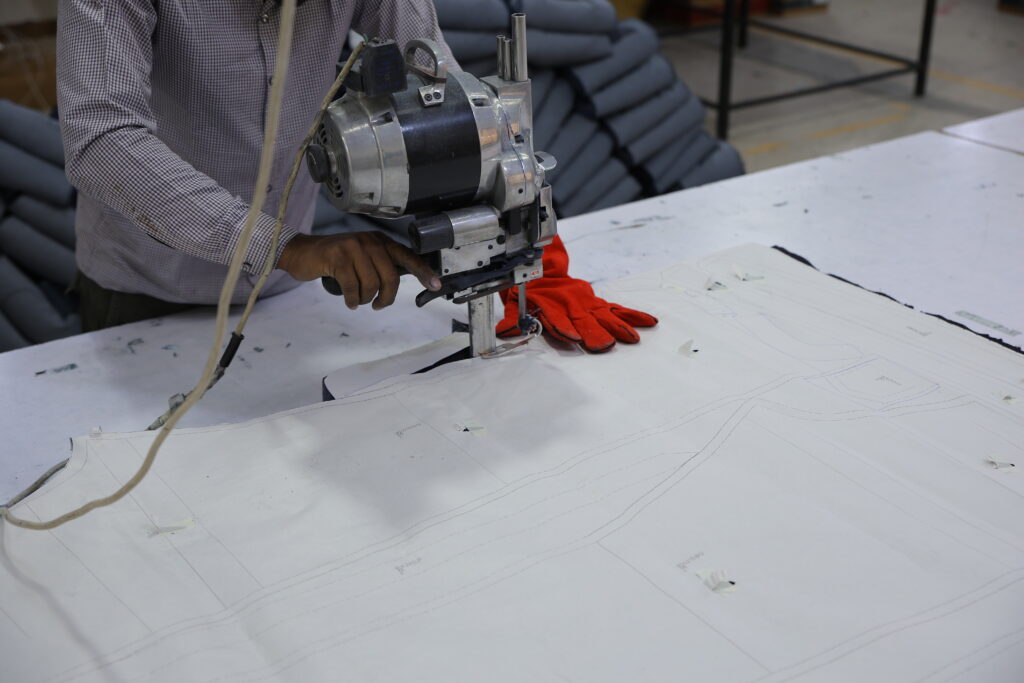
With patterns in hand, the denim is laid out and cut. High-tech cutting machines, or sometimes skilled artisans with scissors, follow the pattern lines to ensure every piece (front panels, back panels, pockets, etc.) is the perfect shape. Accuracy here is key, because even a slight misalignment might turn your slim-fit jeans into something resembling avant-garde fashion gone wrong.
5. Sewing: Where Threads Come Together
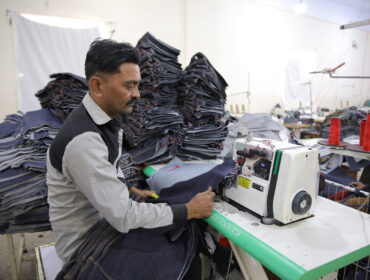
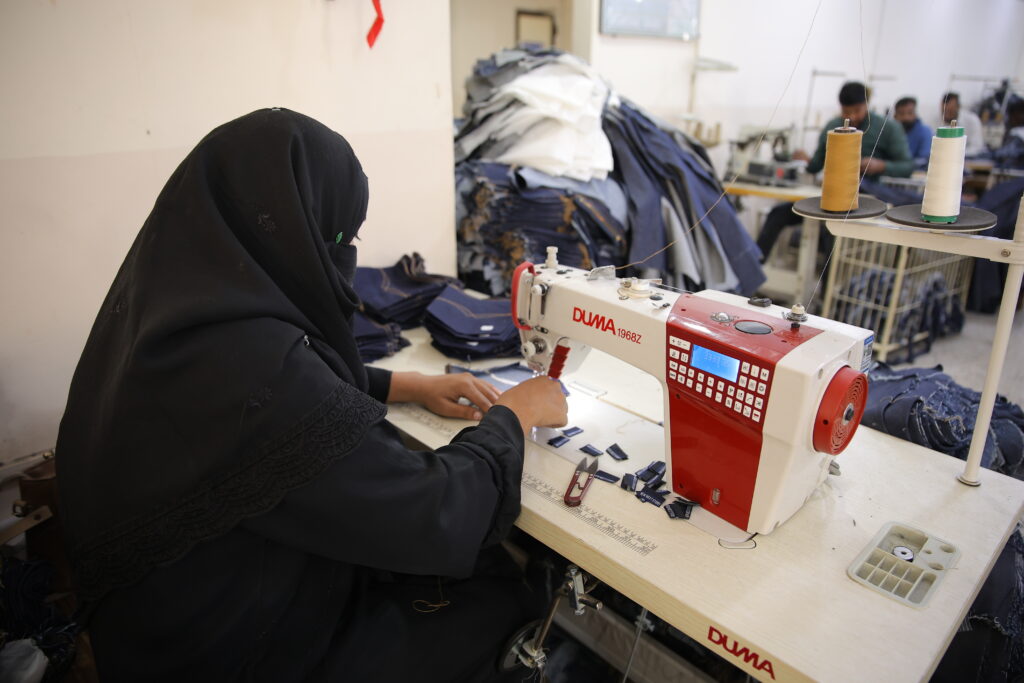
Now comes one of the most fascinating parts of the process: sewing. Skilled workers or robotic sewing machines (yes, there are robots in the denim world too!) stitch together all the cut pieces. The sewing machines’ rhythmic hum could be likened to the background music at your favorite coffee shop – comforting, steady, and oddly satisfying.
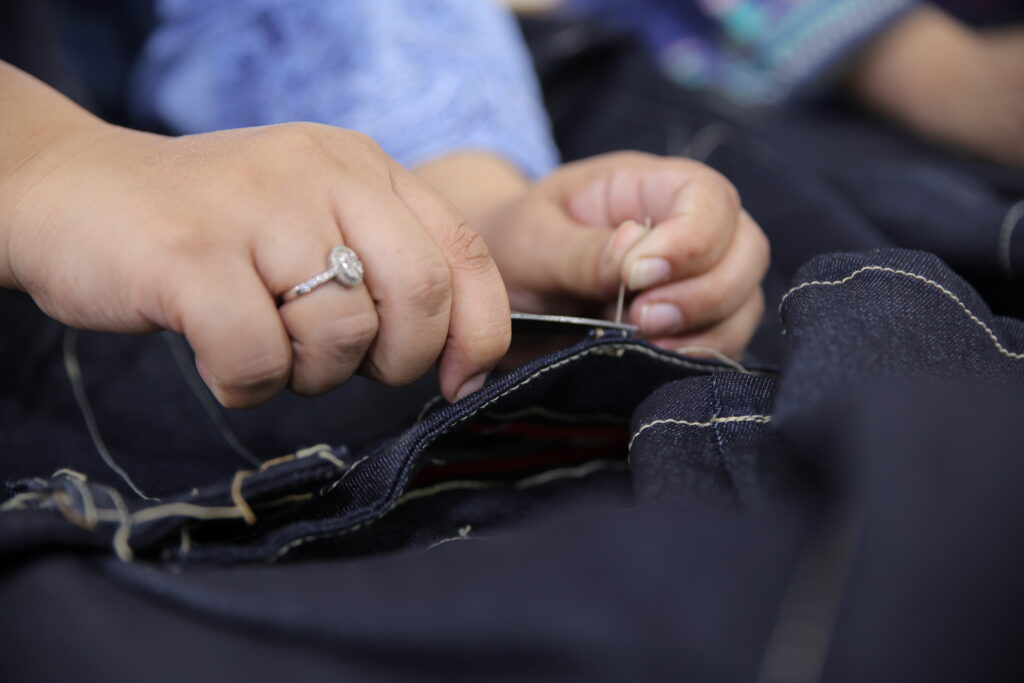
Multiple stitches secure different parts of the jeans. The seams, like the inseams hold everything together. Rivets, small metal reinforcements, are added at stress points (think pocket corners and fly areas) to make sure your jeans can handle the rigors of daily wear and tear. It’s a bit like adding extra braces on a wobbly chair.
And while we’re on the topic of stitching, here’s a fun tidbit: the famous “double-stitched” design not only adds strength but also a dash of style. So, next time you admire those tiny threads, remember, they’re working hard to keep your jeans together.
6. Finishing Touches: The Washing and Distressing Saga
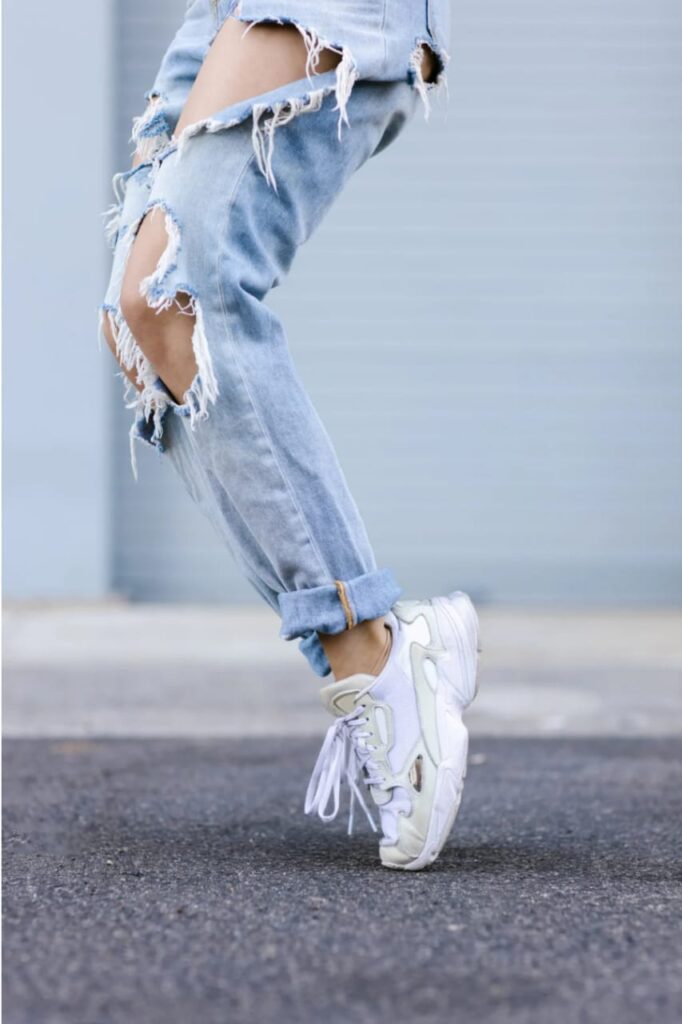
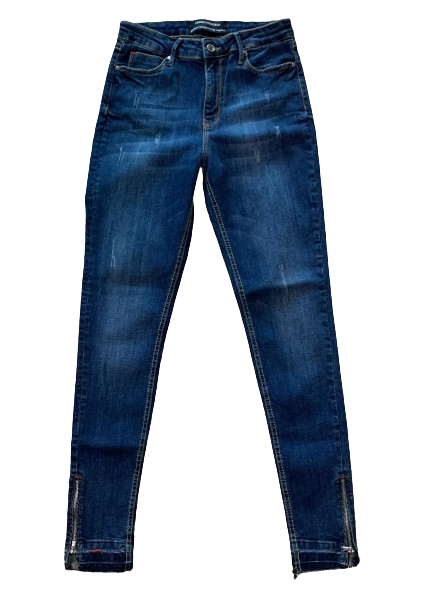
If you think the job is done once the jeans are sewn together, think again. The next stage is all about giving them character. The freshly made jeans head off to washing and finishing stations where techniques like stone-washing, enzyme-washing, or even laser-cut distressing give them that lived-in, vintage look. It’s as if your jeans went on a spa retreat, emerging relaxed and a little bit rugged.
During this phase, the fabric can be softened, faded, and sometimes even pre-shrunk. Each pair is unique, much like snowflakes, only sturdier. They might get splashed with acid or pumice stones to create a worn-in look, because who doesn’t like a bit of “well-traveled” charm in their wardrobe? And if you’ve ever wondered why some jeans are perfectly faded while others still look like they’ve never seen a wash cycle, you now know it’s all part of the masterful artistry of denim finishing.
7. Quality Control: The Final Inspection
Before our jeans are ready to make their grand debut in stores, they undergo a rigorous quality control process. Think of it as the final dress rehearsal before hitting the runway. Inspectors check for any imperfections: loose threads, misaligned seams, or even a rogue rivet that decided to go on vacation. Anything that doesn’t meet the brand’s high standards is either fixed or recycled for future projects.
This stage is vital because, after all, a pair of jeans that falls apart after a few wears isn’t exactly a best-seller. Quality control is the unsung hero of the denim world, ensuring that every stitch and seam can stand up to the rigors of everyday life, be it a busy workday, a spontaneous road trip, or an impromptu dance-off in your living room.
8. Packaging and Distribution: From Factory to Stores
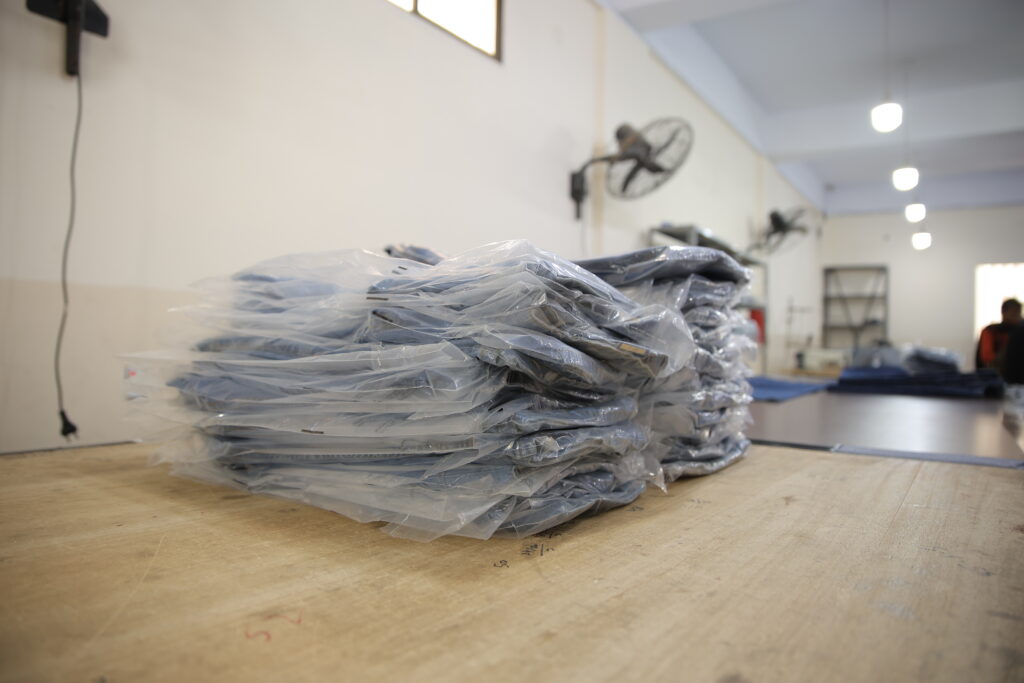
With a final nod from quality control, the jeans are pressed, folded, and packaged. Labels are added, barcodes are scanned, and the jeans embark on their journey from factories to distribution centers, and eventually to your local store or online retailer. It’s a logistical ballet involving trucks, ships, and even airplanes. Each pair of jeans is a tiny ambassador of craftsmanship and style making its way to you.
In a way, this stage is like the final bow after a well-performed play. The jeans have done their part, and now it’s time for you to take them home, where they’ll soon become part of your personal style story.
9. Wearing Your Jeans: The Grand Finale
Finally, the most exciting part of the entire process: you wear your jeans. They go from factory floors to the real world, adapting to your body, your lifestyle, and your adventures. They absorb stories, memories, and even a few spills, each stain and fade adding character.
So, the next time you zip up your jeans, take a moment to appreciate the journey they’ve been through. From sunlit cotton fields to the high-speed precision of modern factories, and finally into your closet, every pair of jeans is a testament to human ingenuity, hard work, and a touch of artistic flair. And hey, if your jeans ever start a conversation about their long and storied past, just smile and say, “Yes, I know—they’re practically vintage!”